

Japan’s Circular Economy Is Moving Beyond Recycling

What Europe can take from Japan’s 2026 CE policy shift
Circular economy discussions in Europe often begin with products.
How should products be designed for circularity?
How can they be made durable enough to stay in use for longer?
How should collection schemes be structured?
How can recycled materials be brought back into the market and circulated effectively?
These questions remain fundamental.
But looking at Japan’s latest circular economy policy from Europe, something else stands out.
Japan is beginning to connect circularity not only with waste and recycling, but with resource security, industrial competitiveness, regional economies and finance.
That shift is worth watching.
Circularity as part of economic security
Japan has long been a manufacturing economy with a high dependence on imported resources.
For that reason, the increasing global competition for secondary materials has a particular significance.
Used products, components, metals and plastics are no longer simply something to manage at the end of their life. They are increasingly being treated as potential resources that need to be secured, collected and returned to production.
Japan’s 2026 Circular Economy Action Plan reflects this change. It places stronger emphasis on secondary-resource supply chains, domestic collection and recycling capacity, international resource circulation and investment in recycling infrastructure.
From Europe, this framing is interesting.
European circular economy policy has developed strongly through environmental regulation, product policy and market rules. Japan is now adding another layer: circularity as part of economic and resource resilience.
That may become increasingly relevant in Europe as well.
The factory is only one part of the system
Japan’s Ministry of Economy, Trade and Industry is also moving beyond a narrow recycling perspective.
Its recent policy work looks across the entire value chain: product design, manufacturing, sales, sharing and product-as-a-service models, maintenance, resale, reuse, refurbishment, collection and recycling.
It also combines regulation with investment support and collaboration between companies, municipalities, universities and other organisations.
This is an important point.
Circularity does not happen simply because a recycling technology exists.
A manufacturer may want recycled material, but someone still needs to collect the material, sort it, guarantee its quality, transport it and carry the investment risk.
And somebody ultimately has to buy the circular product.
In practice, circular economy is less a technological question than a question of how an entire value chain becomes predictable enough to work.
This is where Japan’s current debate becomes particularly interesting.
Finance is becoming part of the circular economy conversation
One of the aspects I find most noteworthy in Japan is the increasing presence of financial institutions in circular economy policy.
The Development Bank of Japan, for example, positions its role not simply as providing capital, but as combining finance, dialogue, knowledge and business-model development. Its broader strategy also connects resource circulation with supply-chain risk, regional revitalisation and industrial transformation.
The Japan Green Investment Corporation for Carbon Neutrality is similarly looking at the combination of local resources, circular economy and decarbonisation, including risk capital for businesses and infrastructure.
This may sound obvious, but it is often missing from circular economy discussions.
A circular business can make environmental sense and still be difficult to finance.
Feedstock volumes fluctuate. Quality varies. Demand is uncertain. Virgin material prices move. Responsibility for quality and performance may not always be clear.
These are not side issues. They determine whether circular business models can scale.
Europe has built increasingly sophisticated circular policy frameworks. But the question of how risk is shared across the value chain remains just as important.
Japan’s stronger focus on finance may therefore offer a useful perspective.
Regional revitalisation gives Japan another dimension
There is another feature of the Japanese approach that deserves attention from Europe: the link between circular economy and regional revitalisation.
Japan is facing population decline, ageing communities and pressure on local industries and infrastructure.
Against this background, circular economy is increasingly being discussed as a way to make better use of what already exists in a region: materials, biomass, buildings, industrial skills, local businesses and human networks.
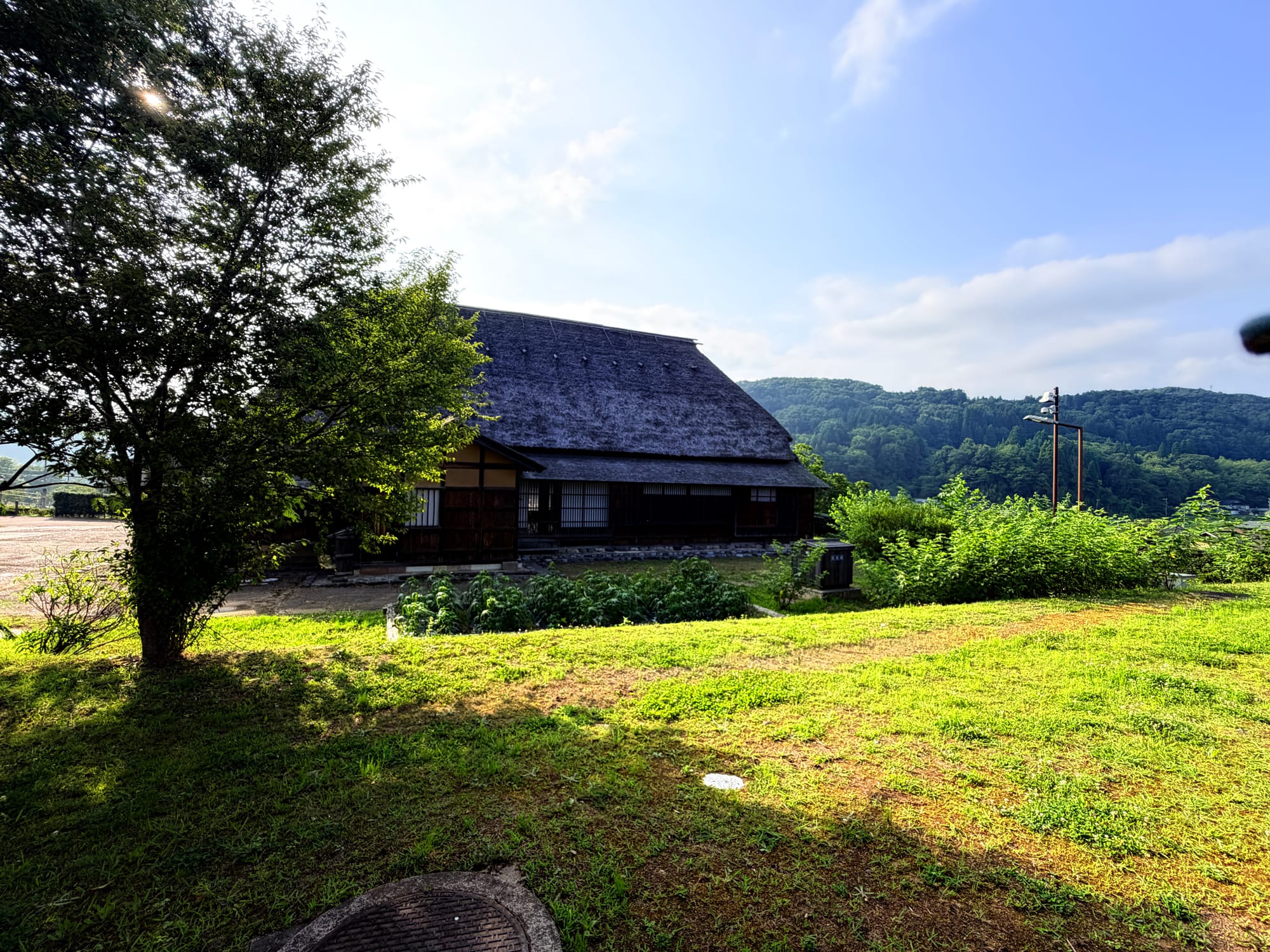
The Cabinet Office is linking resource circulation with regional development programmes, financial support and specialist personnel.
Japan’s agricultural policy is also exploring regional circular systems based on biomass and other underused local resources.
And public investment bodies are looking at whether resources that previously left a region could instead create value locally.
This is different from viewing circularity only as material efficiency.
It raises a broader question:
What should remain in a region, and what kind of value should circulate locally?
For Europe, where many regions face their own demographic and industrial transitions, this question feels increasingly familiar.
Japan is not simply following Europe
It would be easy to describe Japan’s recent policy shift as catching up with European circular economy policy.
I do not think that is the most useful way to look at it.
Europe has developed important frameworks around ecodesign, producer responsibility, repair, product information and secondary material markets.
Japan has much to learn from these developments.
At the same time, Japan’s own conditions are shaping a somewhat different approach: a strong manufacturing base, dependence on imported resources, dense industrial supply chains, regional demographic challenges and a long history of local production systems.
The interesting question is not whether one model is ahead of the other.
It is what each can learn from the other.
From policy to implementation
The direction of Japan’s policy is becoming clearer.
The harder part comes next.
Circular economy is not created inside a policy document.
It happens when manufacturers, recyclers, municipalities, financial institutions, logistics companies, consumers and markets begin to work as one system.
That raises some very practical questions:
Who will buy the recycled material?
Who will finance the infrastructure?
Who will take the risk?
Who will connect the different actors?
These are questions we hear in Europe as well.
Perhaps this is where the next phase of the circular economy will be decided — not by producing more circular strategies, but by building the relationships and business conditions that allow circular systems to operate in practice.
At Circular E, we will continue following these developments from both Japan and Europe.
Not to ask which region has the better model, but to understand what can be connected, adapted and learned between them.